
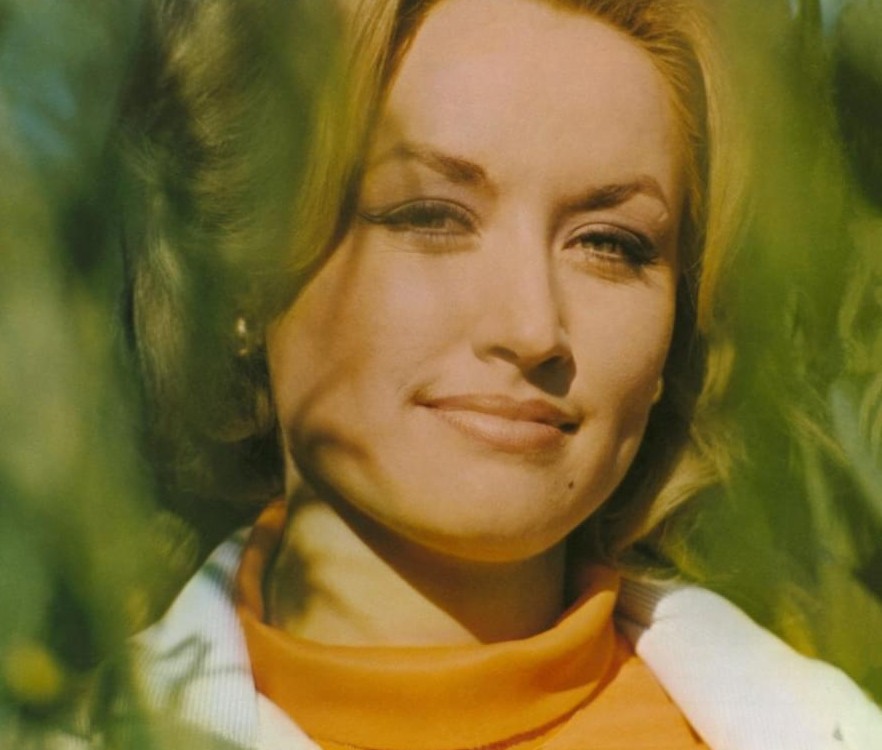
Until yesterday, it was hard to imagine someone who could stitch together in a single story the likes of Donald Trump and Beyoncé, Taylor Swift and Eminem, Sabrina Carpenter and Jack White. Here in Nashville, mourners are lamenting the loss of Dolly Parton, who passed away in the city she called home. The country legend was far more than a recognizable, entertaining icon; she seemed perpetually ready for any challenge, a person who could face a torn seam and come out stronger.
She was also a singular writer—note the emphasis on “singular” because, beyond having a distinctive voice, she often wrote completely by herself. In a world where Morgan Wallen needs five people to craft “I’m the Problem,” or where the norm used to be to gain traction through covers or through creative duets between lyricists and composers, Dolly Parton wrote “9 to 5,” “Jolene,” and “I Will Always Love You” entirely on her own, without backing from anyone else in text or music.
The stories behind these songs have been told countless times. “9 to 5” earned an Oscar nomination for its appearance in the comedy “Working Girl,” celebrating the daily grind and workplace frustration with humor. “Jolene,” with its warning to another woman who had approached her lifelong husband, Carl Dean, who died last year. And “I Will Always Love You,” written on the same day as “Jolene,” was inspired by the moment she decided to part ways with her mentor Porter Wagoner.
In this article we have chosen to focus on five other, lesser-known songs (only one of which appears on Spotify’s playlist “THIS IS DOLLY PARTON”), all of which carry immense social or musical value. Let us explore those moments when Dolly Parton built a better world through her music.
Dumb Blonde
Dolly Parton’s debut album from 1967 opens with a bold statement of intent. As a girl she had sung on Tennessee television and radio programs. Initially promoted as a bubblegum-pop artist or as a songwriter for others, she released a solo album titled “Hello, I’m Dolly,” anchored by a country single that signaled her arrival as a solo artist.
“Dumb Blonde” wasn’t written by her—a rarity in her catalog’s pattern—but it fit perfectly. In this track she already teased the stereotypes of the “dumb blonde,” insisting she would not be “the fool of anyone, just for being blonde.” Following this song, Porter Wagoner invited her onto his television show and tours, resulting in several joint albums until the decision to part ways came.
Just Because I’m a Woman
Another revolutionary entry in her repertoire, this time written entirely by her, is “Just Because I’m a Woman.” Included on her second album in 1968, the song argued for women’s right to have a sexual past just as men do. “I can see your disappointment, by the way you look at me / and I feel I am not the woman you thought I was,” the lyric begins, reflecting on heartbreak and romantic disillusionments experienced by both men and women alike.
In a 2007 interview Dolly Parton explained how she believed she had carved out a niche distinct from singers like Tammy Wynette and Loretta Lynn, though the three were friends and even recorded together at times. “Loretta lived in a house full of kids, sang a lot about domestic life, and I respect that. Tammy sang about almost everything, but also that ‘Stand By Your Man’ thing. And I went out with ‘Just Because I’m a Woman.’ My mistakes aren’t worse than yours just because I’m a woman. I think we all did what we could. I simply filled a gap.”
Touch Your Woman
In her push to make her visions clearer, Dolly Parton released “Touch Your Woman” in 1972. The lyrics plead for physical closeness to settle a dispute, and in its third verse it ventures into a more intimate, sexual space that proved too much for many conservative country stations to air: “You know exactly what makes me feel satisfied / You know exactly what I need / to go to sleep in peace / thanking God that you belong to me.” Perhaps God functioned as a conduit through which audiences could tolerate this message, while Parton was quietly delivering a bold message to American women about their right to be fulfilled.
Love Is Like a Butterfly
It’s tempting to measure Dolly Parton’s legacy solely by her most social-themed songs, yet she was an extraordinary songwriter of dazzling melodies. “Love Is Like a Butterfly” is one of those tracks that doesn’t always come to mind, yet it topped the country charts in 1974. The song features vocal harmonies that feel delightfully drawn from the best of 60s pop-folk, a different flavor from her usual tones, and a true testament to her versatility.
Baby I’m Burnin’
In the 21st century, it would be seen as revolutionary that Kacey Musgraves fused country with light disco elements on songs like “High Horse.” Yet there was a time long ago when Dolly Parton also flirted with disco. Around 1978 she released “Heartbreaker,” an album that included singles aimed at country radio as well as some with pop leanings. There was even an EP that year titled “Dance With Dolly,” in which two tracks from the long player—“Baby I’m Burnin’” and “I Wanna Fall in Love”—were revisited.
Far from sounding cheesy, at least to European listeners, the result stands as a respectable effort. Dolly broke down borders before many others did. For instance, it was five years prior to the Bee Gees’ writing of “Islands in the Stream” for her and Kenny Rogers.
