
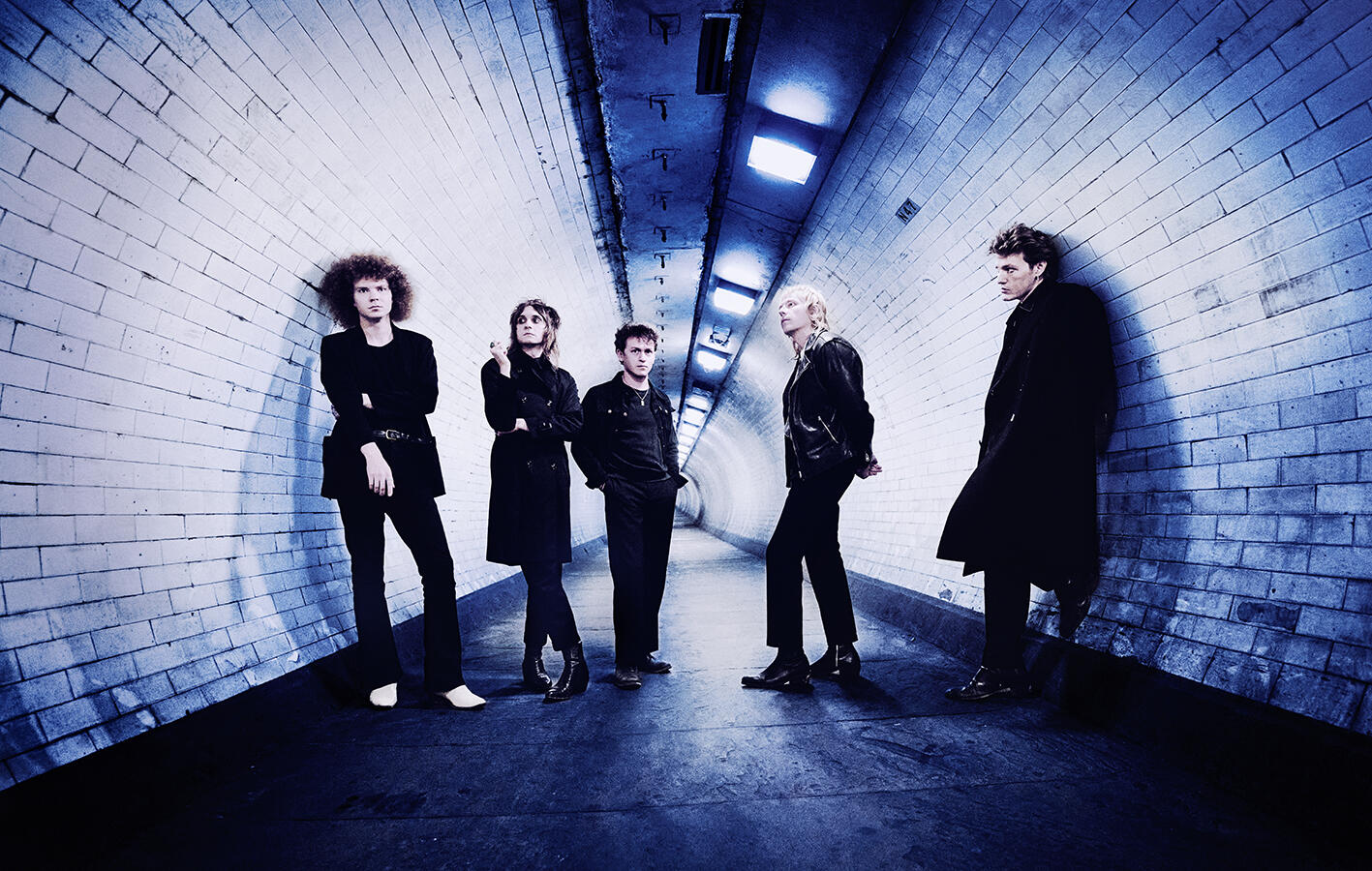
These Americans, more British than the originals, excel at eighties pastiche on a second album that is as maddening as it is thrilling.
If Smiths are on many people’s minds lately, it’s less due to Morrissey’s return—Brigitte Calls Me Baby often opened for him—than to the band’s pervasive influence that threads through several recent releases.
Surprisingly, where The Twilight Sad’s Scotsman-Americanize the sound of Manchester bands (It’s the Long Goodbye), Brigitte Calls Me Baby from Chicago stay English to the tips of lacquered nails. And with this Irreversible even more so than on the previous The Future Is Our Way Out (2024).
An Expanded Field of Influence Reaching Depeche Mode
Exit this time the Elvis detours: the album opens with a track There’s Always that sounds very Johnny Marr/Moz, and Wes Leavins remains an excellent imitator, and this works effectively, even if the emphasis lacks a touch of refinement—an imbalance balanced by the deft production from the Rothman brothers (Blondshell, Yves Tumor).
When the copier threatens to run dry, the band makes a smart move by changing its model a little (The Pit and These Acts of Which We’re Designed, very convincing in the Depeche Mode lineage) and, above all, broadens its eighties scope to embrace a wider spectrum than narrowly targeted tributes, from Ultravox to Duran Duran, via Squeeze.
Thus, this superb pair of tracks with offbeat titles (I Can’t Have You All to Myself/I Can Take the Sun Out of The Sky) also confirms that Brigitte Calls Me Baby is above all a singles-rated band. On such catchy little vignettes, like the closing Send Those Memories, one allows oneself to be swept up by this fine gang of forgers.
Irreversible (ATO/PIAS). Out since March 13. Live at the Trabendo, Paris, on March 31.
