
Every time a remake of a Hollywood classic premieres, critics reach for the magical word: “unnecessary.” Today, given the tendency to turn iconic films into series or miniseries, complaints about their “necessity” have multiplied. In fact, the fear of the remake label has led many producers to justify these projects by appealing to their literary origin: it’s not a remake, it’s a “new adaptation” of the original work.
Cape Fear (Apple TV) began to be questioned from the moment it was announced. The great paradox is that many of the criticisms the series is receiving now were already directed at Scorsese’s film in its day (you only have to read the reviews following its Berlin festival premiere). Cape Fear (1991) was a remake of Cape Fear (1962), which in turn adapted the novel The Executioners by John D. MacDonald (reissued this year by Debolsillo under the title Cape Fear).
In an audiovisual ecosystem crowded with sequels, prequels, reboots, spin-offs, remakes and expanded universes, does it really make sense to keep framing the debate in those terms? The question should be different: is there an artistic reason to make a new version? Does it offer something that justifies returning to familiar material? A remake can be (and usually is) a redundant, opportunistic and lazy rehash, but it can also provide an interesting rereading from another point of view, another historical context or a different format.
In the case of series, there are many examples of remakes that are anything but “unnecessary.” To name a few of the most recent: Mr. & Mrs. Smith greatly surpasses the 2005 film; Fargo bears no envy of the Coen brothers’ movie; and Inseparable offers a highly suggestive rereading of Cronenberg’s classic. Not to mention a version of Cape Fear that many seem to forget: Cape Feare, the hilarious second episode of the fifth season of The Simpsons, which parodies Scorsese’s film.
Cape Fear would not belong on this list. Nick Antosca’s version (Channel Zero, New Cherry Flavor), produced by Spielberg and Scorsese, does not equal or surpass its main reference, Cape Fear, nor does it offer a particularly interesting rereading. It lacks suspense and dramatic coherence, and it is overrun with soap-opera subplots and over-explanations for viewers with attention problems.
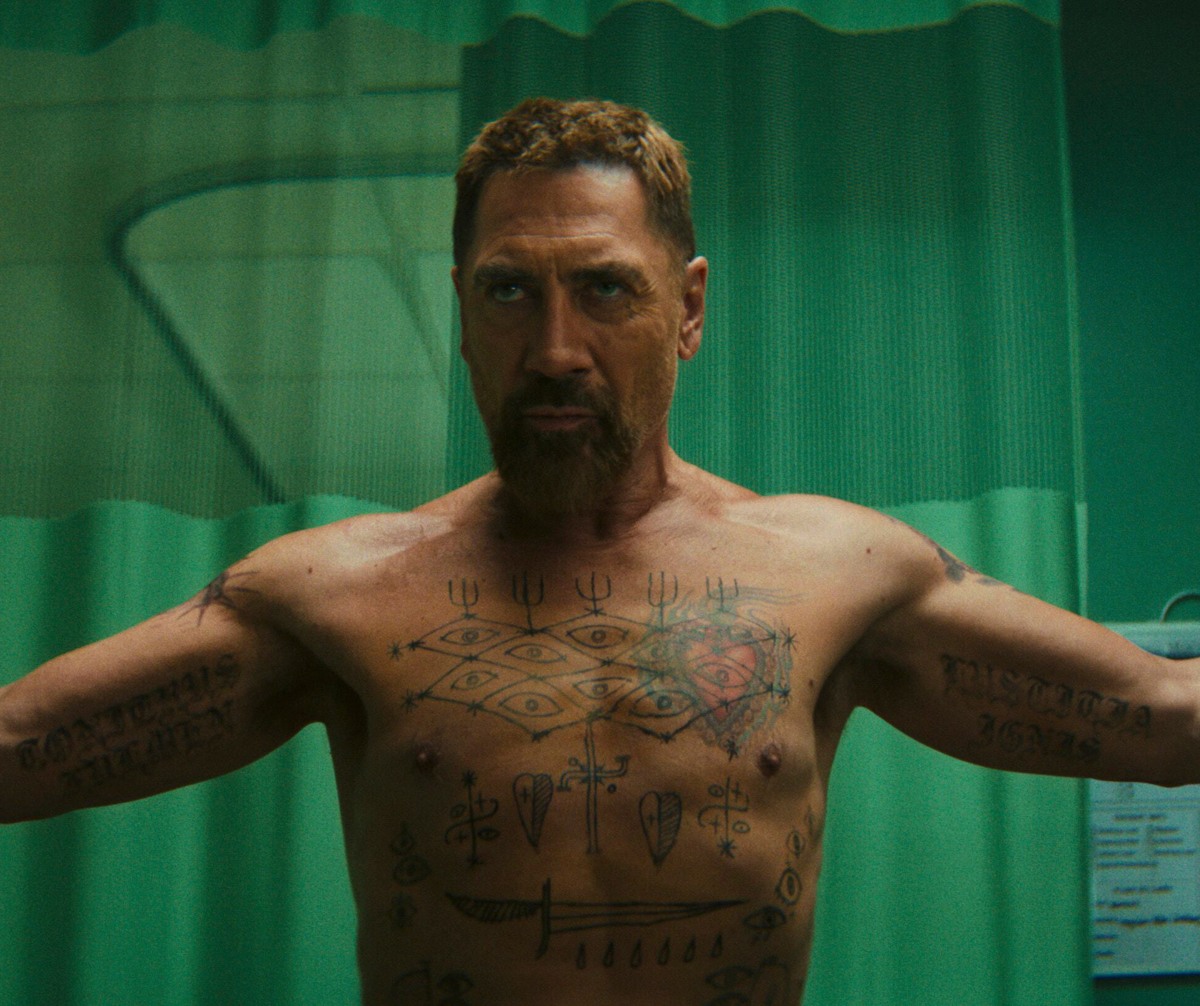
Nevertheless, it is a very enjoyable version. Three reasons. The first is the lead duo. Javier Bardem nails the character of Max Cady, delivering a very entertaining, over-the-top performance that blends seductive charisma, Machiavellian manipulation and zany psychopathy. Amy Adams, for her part, plays a defense attorney (the most significant change from the film) and manages to convey very well that mixture of guilt, fear and determination (also worth noting the promising Lily Collias, whom we meet in the excellent Good Girl; more discreet is Joe Anders, the son of Kate Winslet and Sam Mendes).
The second is the atmosphere. Cape Fear is set in Savannah, Georgia, in the midst of hurricane season, under a hot, humid, suffocating heat. Its mansions, its lush vegetation (with the famous Spanish moss hanging from the trees) and its decadent beauty (recall Midnight in the Garden of Good and Evil) provide a perfect Southern Gothic backdrop for a story in which, behind a façade of respectability, secrets, guilt and violence begin to surface.
And, third, its audiovisual treatment. Cape Fear completely avoids the usual television aesthetics. It embraces excess, artifice and the expressionist distortion of Scorsese’s blueprint through deliberately saturated lighting and a blend of formal devices such as zooms, rapid pans, distortions, tilted angles, black-and-white and color negatives. All of this is accompanied by Bernard Herrmann’s iconic score, whose ability to generate a sense of threat (a prime example being the pool prologue in the eighth episode) remains intact more than six decades later.
