
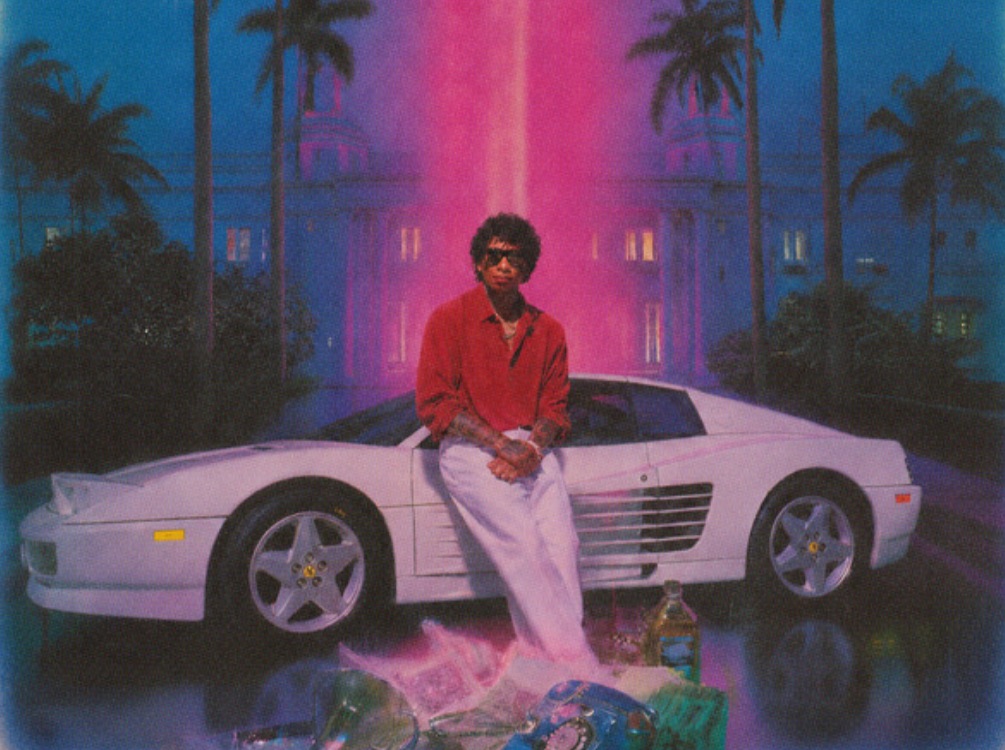
The AI saga is turning into a soap opera. Despite platforms’ efforts to draw a line between real artists and those generated by artificial intelligence, the recent confusion surrounding Fenix Flexin’s surreal hit “RUBBERZ,” and Tyga’s shameless promotion of his misguided 1980s concept—are clear evidence that listeners are stepping into a era that is, in many ways, increasingly dark.
No one may have noticed, but that Spotify Spain Viral 50 playlist no longer exists. It was being flooded with an unmanageable amount of slop, and, in any case, it was the product of an algorithm. The platform then introduced an artist verification tag to differentiate humans from machines. Yet the proof that things remain a bit the same is in the Spanish Rap list, supposedly curated by real people. And still, we find the track “Se Te Ve El Plumero” by Solea Kella, which does reveal its plumage.
The fact that the only woman with a solo track in the entire list, made up of 50 songs, is a robot is the cherry on top. Real female artists are relegated to being included as collabs or, in Faenna’s case, at the last slot. “Se Te Ve El Plumero” isn’t a confusion: it’s 100% generative AI and isn’t going to go much further. The case of “RUBBERZ,” having reached 58 on the Hot 100, is something else entirely.
The massive confusion around ‘RUBBERZ,’ the first truly AI-made hit
Let’s get this straight: you’re listening to the new track by Fenix Flexin, a member of Shoreline Mafia, expecting a hard trap banger from one of the West Coast’s toughest crews. The song turns out to be an ’80s revival in which Flexin doesn’t rap, but sings about his usual themes—money, fame, pills—with one conspicuous difference… he sports an over-the-top British accent. Everything surrounding the track is so funny and out of place that at first nobody doubted its artistic intent, but the clues were there, without a doubt.
One thing is to generate a song from scratch with artificial intelligence, and another is to use it in the production process, adding extra instruments or even a different vocal filter. This is what led the Internet to suffer a collective confusion around “RUBBERZ.” Purps On The Beat is credited as the producer on the track, and Fenix Flexin claimed in the comments that the track had been recorded “the way I always record all my tracks,” though in interviews he always gave a few evasive answers to the question.
After numerous tests and accusations pointing to the use of Treblo, another generative AI app, the artist ended up clarifying that he hadn’t tried to hide the use of this technology, arguing that “I’ve never said I don’t use AI” and that “it had nothing to do with the recording process.” All of this is true, obviously with the tool being used in post-production. The embarrassment surrounding AI usage revealed new boundaries with Tyga’s latest release, surely the first mainstream artist to wear that pride on his sleeve.
Tyga’s terrible ‘$TARFACE’: his out-of-date 80s fantasy
Everything, from the cover in which Tyga sports a perm to the 80s concept inspired by “Scarface,” suggested that “$TARFACE” wasn’t a good idea. The most notable reactions came from Pitchfork, which awarded the album the website’s lowest score ever (0.0) and claimed that “its existence has made the world a worse place,” and Doja Cat, who was more concise: “Tyga is a dick for making an AI album.”
Doja Cat comments on the recent controversy of Tyga using AI for his new album:
“Tyga is a p*nis for making an AI album.” pic.twitter.com/vWdgPMYyPJ
— Doja HQ (@DojaHQs) August 13, 2026
Adapt or die. That’s Tyga’s mindset, who, although at first he claimed that “everything we used on the record are things from the 80s” (laughable), did not hesitate to express pride in his interview with Vibe: “I know people will be upset by this, but it’s where technology is headed. It’s not different from Auto-Tune’s arrival. Some opposed it, but real artists embraced it and used it,” he said.
If the music were remotely good, his argument might have some validity. Tyga says they used AI as they encountered needs to add an era-appropriate synthesizer or “a guitar solo as soon as possible,” and that everything related to the voice and the lyrics is his doing. Setting aside the irony that the worst part of “$TARFACE” is the lyrics and the vocals, what’s striking about these statements is that Tyga justifies using this technology with a basic guitar solo as the main evidence. The real reason is, as always, money.
Given how little it supposedly cost Tyga to make this record, it will generate profits purely from the controversy it stirs. He himself admitted that it only took three months to complete the entire album. So, did Tyga create this work, allegedly inspired by his mother’s passing, just to squeeze a bit more cash? It seems so. He cites Prince, Michael Jackson and Hall & Oates, among others, as major references for the album. Listening to it, the closest thing I can think of is Party Posse, Bart Simpson’s adolescent boy band.
Playing “$TARFACE” from start to finish should be a consequence of morbid curiosity alone. The production is worthy of the golden age of Minecraft parody videos on YouTube, but without any charm. Tyga’s delivery, supposedly his own work, sounds like someone who hasn’t stepped near a mic in his life, not a veteran with fifteen years in the business. Worse still, his performance feels dated the moment it’s released, directly recalling what Fenix Flexin did on “RUBBERZ,” which at least was novel in context. And yes, these two plan to release a joint single in the same vein.
Maybe Tyga has sacrificed his career to ride a wave that everyone despises, but he has also paved the way for many others. Beyond the marketing built around AI confusion and controversy, which inevitably translates into streams, it wouldn’t surprise me if more artists started taking on surreal projects like Tyga’s. Especially if the low cost guarantees profits. We only ask that at least it be listenable.
