
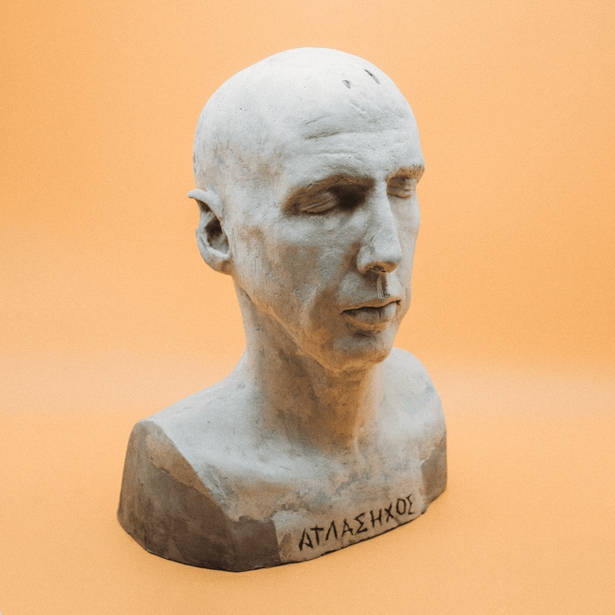
Some time ago I read a statement by Bradford Cox that stuck in my memory. He said he didn’t like sleeping because he felt terror at losing consciousness, stemming from his harsh hospital experiences during adolescence. “I think since then I’ve carried a trauma. One of my greatest fears is losing consciousness. I can’t stand that strange state between sleep and wakefulness when I go to bed. I hate it. Just thinking about it makes me want to vomit,” he explained.
‘Thanatos,’ Atlas Sound’s first album in 15 years, is a record deeply preoccupied with death. If someone fears losing consciousness during sleep, how should they face the total cessation of existence? Stereogum already wonders whether Bradford Cox might be dying, though it’s worth remembering that the Marfan syndrome he has can follow a highly variable course and that medical advances have significantly improved his prognosis.
In any case, ‘Thanatos’ conveys the impression of being made by someone who thinks about death more than many. But Cox does not limit himself to looking inward. He also looks outward, and what he finds is anything but tranquil.
Recorded over several nights with a portable 8-track Tascam, ‘Thanatos’ is not exactly a Deerhunter album. Atlas Sound has always been a route for Cox to try different things, though here it feels more focused on songs than on atmospheres. The sense of entering a strange world is pronounced, especially when reality or self-perception seems distorted. In ‘Roots Without a Tree,’ the album’s most solitary track, Bradford gazes into the mirror and cannot quite believe the ugliness he sees reflected. In ‘Thanatos’ that inward gaze coexists with another outlook toward the outside world that is far from hopeful.
That almost claustrophobic sensation is also reflected in the sound. ‘Thanatos’ has a tangible aesthetic and almost a tangible smell. The songs sound fragile, delicate, and autumnal, yet the texture recalls rotten wood, fungi, damp rocks, and earth. A nature that isn’t exactly the idyllic ideal we’re sold, but a place as beautiful as it is strange and sometimes hostile. “Beautiful and queer,” as he repeats in ‘Arcadia.’
When Bradford looks outward he finds nothing less than the failure of the Western promise. In ‘Akron’ he describes it alongside American industrial decay and a democracy that is “crumbling.” ‘Day for Night’ doubles down on that sense of collapse, with families buried under lakes of tar, while ‘Passing Strange’ reinforces the impression that catastrophe is always near: phones that nobody answers and a brain turned into a factory of images and data.
As if recording the album entirely by himself had been the only possible option, ‘Thanatos’ seems built from the odds-and-ends Bradford Cox has scattered around the house. In addition to guitars there are battered pianos, marimbas, shakers, and dry percussion that seem played with anything. Even the album’s psychedelia has a handmade, domestic feel. The microphones sound cheap and dirty. Perhaps that’s why Bradford keeps enunciating the consonants as if he were singing in bold, to ensure his voice is captured clearly. ‘My Ship Sank in Daylight’ feels like a lo-fi song from the 1950s, adrift in time. Its main melody sounds like a phone that has carried signals for all eternity.
It’s curious that even when the songs imagine a paradise, it isn’t exactly what it promises. ‘Arcadia’ is perhaps the track to start discovering this project, halfway between a waltz and Broadcast. But there’s no refuge here either: the Eden Cox describes has a plastic sky. The nature of ‘Thanatos’ offers little consolation.
The album opens with ‘Octoberland,’ a ghostly song populated by spirits, and ends with ‘Kora,’ another succession of nocturnal visions that fade upon waking. In the latter, Cox recalls dreams of blood, black birds, and shopping malls on the verge of exploding. The song ends with a repetitive sound that seems like the ticking of a clock. Or is it a bomb?
For years, Deerhunter shared on Spotify their precious Sunday playlists, small collections of music that seemed to open a window into Bradford Cox’s private universe. There was something almost secret about them, the sense of listening to songs someone had found and wanted to share with very few people. ‘Thanatos’ yields a similar impression, only this time the songs are his own. It’s like a private collection of blues, folk, old pop tunes, and small domestic nightmares, recorded by someone who long ago decided he was better off isolated from the world and sheltering in his own universe. Even there, death still finds him, of course.
