
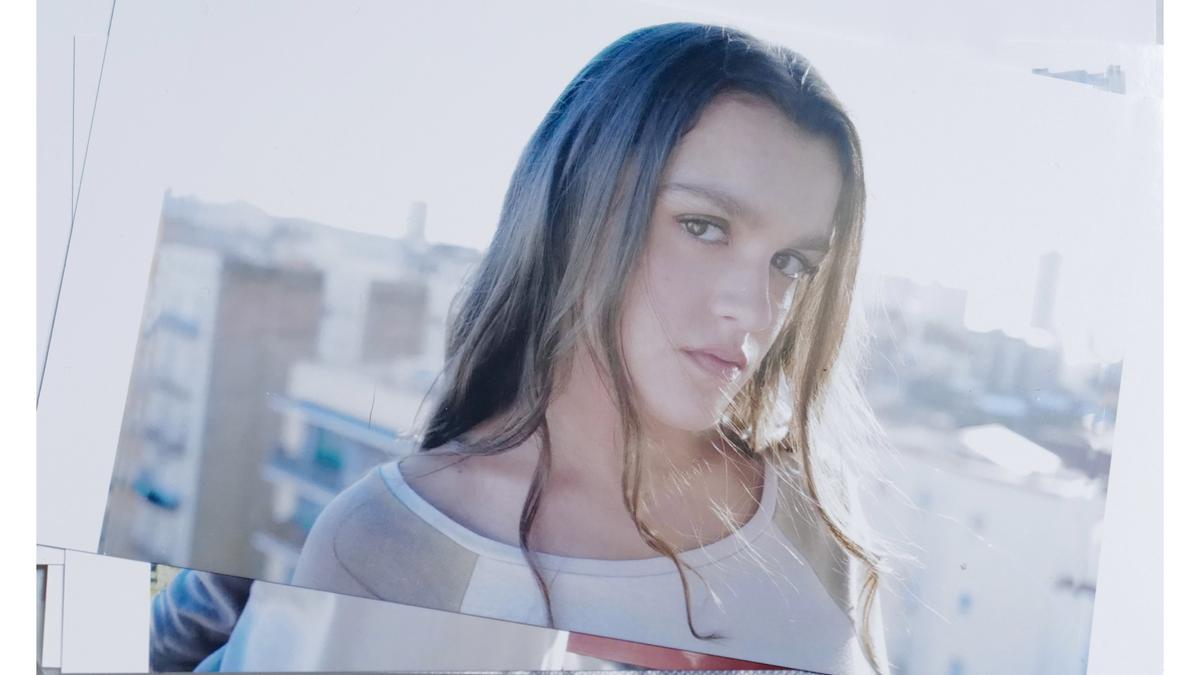
The fourth album by Amaia Romero will be particularly significant, marking her first release since signing with Sony Music. With Universal she released her first three records, linked to Operación Triunfo, but now she begins a new chapter with a label that has already shown it can turn Spanish artists into international phenomena.
Amaia’s signing with Sony Music is generating discussion around a possibility: that she might be internationalized. It isn’t confirmed that this is the objective, but it wouldn’t be far-fetched to consider it. After her Tiny Desk appearance, Amaia has attracted more international attention than ever. There have even been whispers that she may have hired Rebeca León, Rosalía’s former manager, though this is also unconfirmed.
In any case, you don’t need to look as far as Rosalía to see that Spanish pop is at a particularly vibrant moment. For some time now, proposals like Rusowsky, Guitarricadelafuente, Judeline, Ralphie Choo, or Amaia herself seem to be pushing the boundaries more than much of Anglo pop, which often seems trapped in perpetual revival. A curious fact: Bb trickz isn’t the first Spanish artist to work closely with Benny Blanco; Ralphie Choo did so some time ago, though the outcome of that collaboration remains unknown.
The creative moment is so good that artists like Ravyn Lenae have collaborated with Rusowsky, or Judeline appears on Karol G’s new album as a guest artist and songwriter. And the interesting part is that none of them had to conform to international pop to spark interest abroad. They haven’t had to abandon their distinctive voice, nor, of course, stop taking risks. Precisely those traits seem to be arousing curiosity.
Rosalía and C. Tangana already demonstrated that it was possible to internationalize Spanish pop without hiding its origin. But both had relatively easy-to-identify codes abroad: flamenco, copla, Latin music, the Spanish imaginary… Rosalía, moreover, traversed reggaeton and urban codes that already had a global language. Amaia is unlikely to do that. And it wouldn’t make much sense either.
Because Amaia is a very Spanish artist, but not in a traditional or folkloric sense. She is closely linked to the indie scene and to a milieu where names like Amore or Rebe — who has just been interviewed on NPR — sit, and above all she has a persona defined by a naturalness that is hard to manufacture. We have recently seen her live again, delivering one of those moments that are both endearing and hilarious, seemingly possible only with Amaia.
“no es que esa es la segunda parte, tampoco os la sabéis vosotros” pf nadie como ella macho pic.twitter.com/mRE9usBm8x
— andrea ོ☼ (@xqueapareciste) August 9, 2026
The naturalness of Amaia may be one of the traits that most define her as Spanish and, at the same time, one of the hardest to translate abroad. Rosalía could take flamenco to the world, but Amaia would carry something far less concrete: her way of being, of singing, of writing, and even of making mistakes.
That is why the idea of Amaia potentially going international is so intriguing. No one imagines that she needs to become more urban, more Latin, or more “global” to achieve it. If it works, it will have to be precisely for the opposite reason, because there would be interest abroad in that Amaia—somewhat naive, strange, natural, and deeply singular—that we already know here.
Perhaps it is harder to market than Rosalía’s flamenco or C. Tangana’s iconography, but it would also be a far more interesting test of how far Spanish pop can go right now. The question is not so much whether Sony can make Amaia international, but whether they can make people outside Spain want to know her without Amaia ceasing to be Amaia.
