
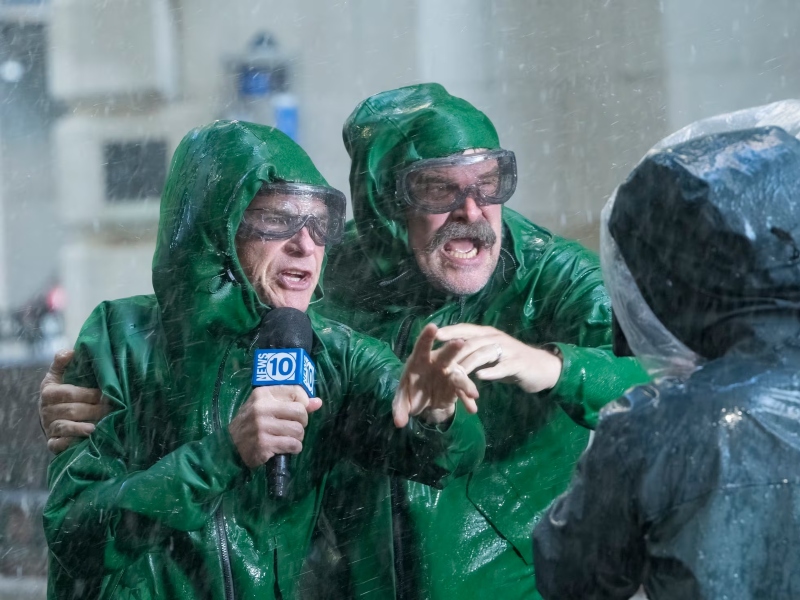
It is the Emmy favorite, alongside ‘Bronca 2’. Its five lead performers are nominated (David Harbour and Linda Cardellini have strong chances of taking the prize), as is the screenplay and the direction by Steven Conrad. The best thing you can say about ‘DTF St. Louis’ (HBO), given the current climate of “algorithmic” fictions, is that it defies classification. Is it a crime mystery? A skewed humor comedy? A family and marital melodrama? A pitch-black satire of suburban North America? A heart-wrenching meditation on midlife crisis? A buddy movie? A love story?
‘DTF St. Louis’ stands out precisely for its heterodoxy, both tonal and narrative. On the tonal front, Conrad, creator of ‘Patriot’ (Prime Video) and of the Spain-unreleased ‘Perpetual Grace, LTD’ (he also wrote ‘El hombre del tiempo’, a film with which this series shares more than one point), achieves a fabulous balance between drama, comedy, and police intrigue. A single scene can begin as an absurd situation, drift into discomfort, and end up revealing an unfathomable sadness.
Conrad does not underline in red nor flash blinking lights at any of these tonal shifts. He lets them coexist, sometimes even within the same conversation, trusting that the viewer, whom he does not treat as if they had the memory of a two-month-old baby, will decide whether what they’re watching comes off as eccentric (that bike, for heaven’s sake), pathetic, or moving.
Something similar happens with its structure. The series opens with the promise of a classic mystery: an incident and a pair of antithetical cops. But the whodunit is almost a pretext. Through interrogations, flashbacks, and scenes that return again and again from different perspectives, ‘DTF St. Louis’ goes about re(de)constructing the complex relationship among the magnificent trio of leads: Floyd (Harbour), his wife Carol (Cardellini), and his friend Clark (Jason Bateman). Each new piece of the puzzle not only brings us closer to solving the mystery but also changes what we thought we knew about the characters and their relationships.
Is it a dosed release of information for dramatic purposes or sly writerly misdirection? Conrad walks a balance between both. Although at times he comes alarmingly close to crude manipulation, especially regarding the “femme fatale” character, he never fully falls into the dirtiest trap. He plays with our expectations, yes; but, overall, he does so in a very intelligent and elegant way.
In fact, that play with perspective is the series’ greatest achievement. Almost everything that seems obvious ends up more ambiguous than expected, particularly the relationships between men. As the title of the last episode says, ‘No One’s Normal. It Just Looks That Way From Across The Street’. That is the fascinating journey of insight the series proposes: from the sidewalk across the street to the other side of the door.
