
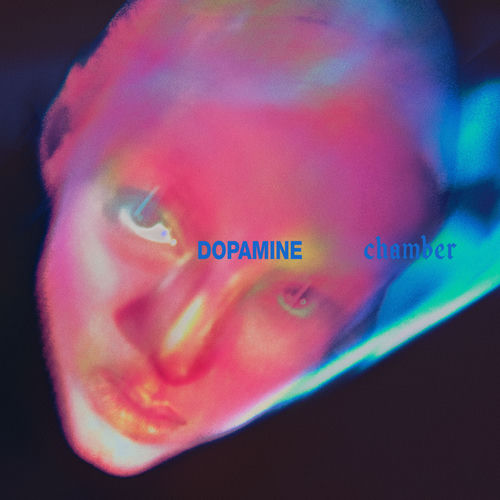
Fontaines D.C. have released five albums since 2019, and they are all superb, which makes them the most relevant and consistent band of this decade that long ago crossed its midpoint. About this new release, Dopamine Chamber, there’s a lot of talk that they’ve shifted toward “stadium rock,” probably because the venues they play are getting bigger, though it would still be a rather odd kind of stadium rock. And while in some songs the Irish group broadens their sound to something vaguely reminiscent of Depeche Mode’s Music for the Masses, in most recordings they go in the opposite direction.
Without radical or flashy changes, the Irish have slowly left behind the post-punk of their beginnings, prioritizing their sensibility over conformity to any single genre. At times they can feel a touch grunge, other times they seem to follow the lines of Nick Cave or Lana Del Rey, or even weave in a rap cadence; what truly matters is the desolate message about the times we live in, as well as a retro, home-made aesthetic. No matter the gold or platinum discs they’ve started to rack up, especially in the United Kingdom, their videos still look as if they were shot on a student’s budget in Visual Communications.
Paradoxically, that gives the band a certain gravitas, the image of knowing how to build a career on the margins of the industry. Fontaines D.C. have spent several records speaking of generational malaise, of gentrification, and the anxiety produced by the latest technologies. In this album Silicon Valley, home to Apple, Facebook, and Google, the bleak setting of the opening track—titled Six Shoot Morning—evokes Kraftwerk in its atmosphere, or, to reference something Irish, Passengers, the brief electronic experimental group that U2 formed in the 1990s.
“Everyone is depressed, we’re all running on a wheel” is the message of Mimesis, the most New Order-sounding song they’ve ever released; the album closes with the death-and-destruction refrain of Intimate (“Dying and dying and dead / Dying and dying and dying and dead”) and the project’s title draws from the track One Man. “A dopamine chamber to try to kill the pain / You won’t escape once you’ve given it a name.”
At times, however, Fontaines D.C. offer a glimmer of hope or, at least, contradictory messages, perhaps the fruit of a 2026-style bewilderment. Their tour de force this time is Marianne, one of the finest songs of their career—which, by now, is a high bar to clear. Beneath cryptic lyrics that invite both to “keep dreaming” and to “disappear,” there lies a spectacular string section and one of Grian Chatten’s most affecting vocal takes, who knows how to sigh, breathe into the mic, and when to fall silent, without overreaching any technique. His growing charisma as a singer is also evident when in One Man he pleads four times in a row, “I’m just a man.” Perhaps a few years ago he would not have dared.
That does not mean we should undervalue the band or regard Fontaines D.C. as a one-man project. Grian Chatten did release a solo album that wasn’t bad, but XL’s press notes are generous with details about what each member has contributed, and one of the best ways to verify it is through Tongue. It’s a compact symphony in which the drums flirt with drum ’n’ bass or big beat rhythms, the guitars roar, the piano played by James Ford helps unleash, and the strings act this time as more than mere accompaniment. The sense of a stadium-ready track is enhanced by the aforementioned One Man, which—at most—reminds of The Verve in its latter half; and by the collaboration with Rosalía.
Where Is Gone goes somewhere no one anticipated: into the territories of Nancy & Lee and Morricone, or, if we want to mention something contemporary, Cat’s Eyes. Both Chatten and Vila deliver superb, precise performances, though it’s a touch frustrating that, given their ambitions, they did not dare to deconstruct the recording, as Lee Hazlewood did with Some Velvet Morning sixty years ago. The track also suffers from appearing a little too early in the sequence: it would have made a fitting closer for the album, certainly more charismatic than Intimate.
Fontaines D.C. manage not to deliver a too languid record by opening Demolition with a chorus and a post-chorus that overwhelm, then placing toward the end a trotting number like You Miss Me, and above all by being adept at portraying toxic relationships in a toxic world, so explicit that you can barely blink if you’re listening closely. In Happy for You the line “if you go, I won’t chase after you” lacks any credibility; and in the acoustic Japan, a girl leaves her body to have sex, and pays for all his misdeeds. The guy offers her “thanks without smiling.” “Cinematic feeling,” they themselves proposed in Marianne, aware of the universe they’ve built. Have I seen any of this in a Wong Kar-wai film, or not yet?
