
The longest-standing Kanye West fans know all too well what disappointment feels like. Unlike on stage or in the studio, the indefensible yet visionary artist always seems to outdo himself: when he grabbed the mic from Taylor Swift at the infamous 2009 VMAs, when he discarded what could have been the best albums of his career, when he proclaimed himself a Trump supporter and claimed that slavery was “an option”… The list goes on.
I began listening to his music in 2019, memorizing his entire discography in time to witness live his conversion to Christianity in “JESUS IS KING.” That was a disappointment on a musical level, but nothing compared to what would come next. We complained about his angelic gospel Masses with Sunday Service, but we were happy and didn’t know it.
His next move, around 2022, was to start praising Hitler, promote merchandise bearing the swastika, flood the internet with antisemitism, sexism, and folly, and direct violent and hurtful comments at his closest collaborators. If the misogynistic episode with Taylor seemed to be forgotten in favor of his indisputable masterpiece, his Nazi drift propelled him to No. 1 on the US charts with “Vultures.” Kanye always gets his way.
After apologizing and attributing his actions to a bipolar disorder, whose origin he traced to the car accident he suffered in 2002, Kanye announced his first show in Spain in 20 years for the release of “BULLY.” The eve of the concert felt strange. There was a lack of hype that seemed unthinkable five years earlier, born of a sense of direct betrayal of the ideals promoted on albums as essential as “The College Dropout” or “Graduation.” One could say I had lost faith.
My moral unease wasn’t the only consequence of the American’s reckless words. Thus, 40,000 seats at the Metropolitano filled yesterday with the foreign wreckage of canceled tours in France, Poland, Switzerland, Italy and the United Kingdom, each territory citing as the direct reason West’s aggressive antisemitism. The Spaniards, on the other hand, perhaps didn’t even realize there was a concert because promotion for the show had been utterly nonexistent. By the time Kanye took the stage, hundreds of tickets were still available.
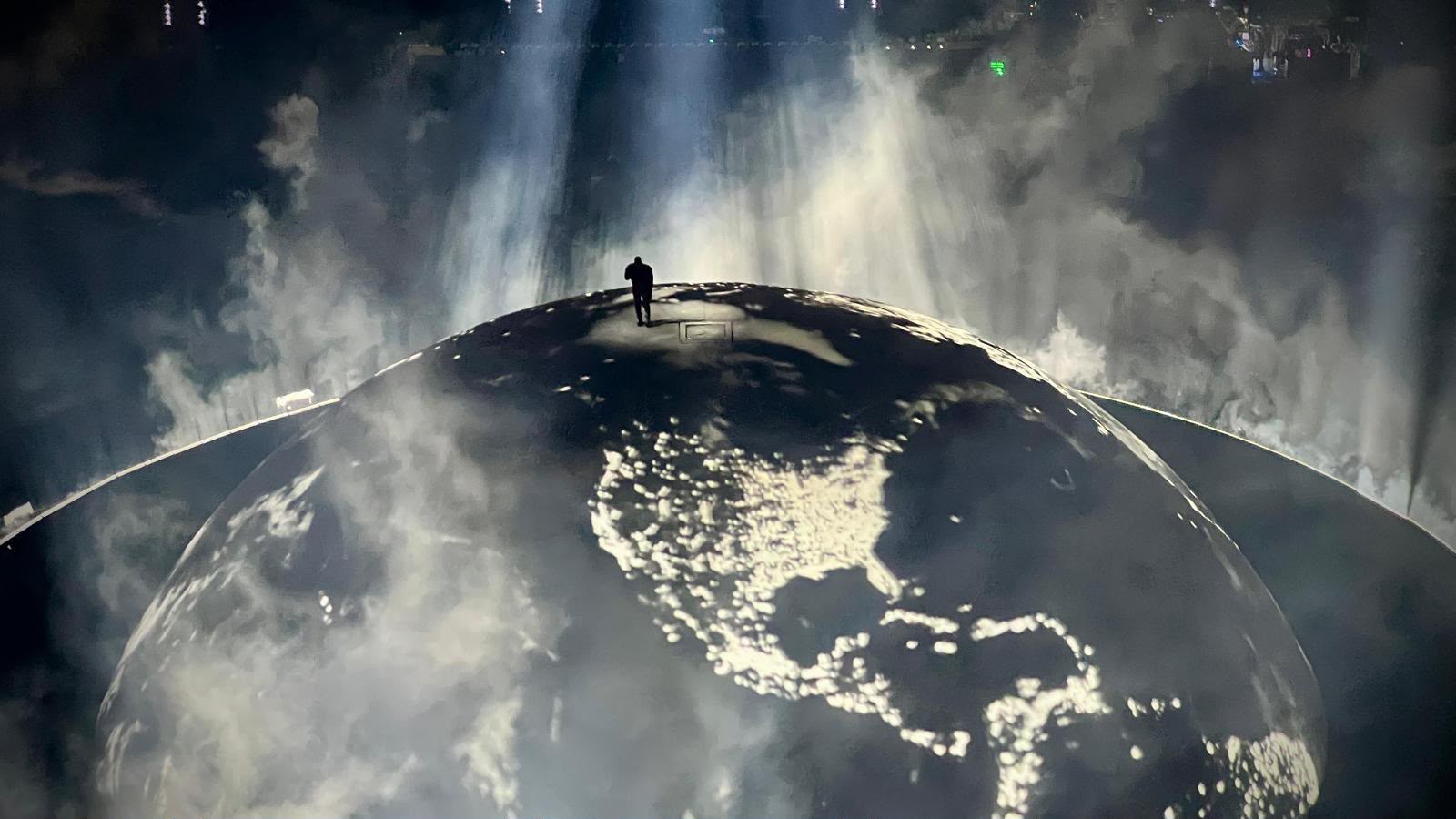
The toxic relationship we fans had with Ye before “Vultures” is a case study in itself. Displaying himself as lazy, dull, and distant, he somehow managed to make the show feel free of the many shortcomings it presented. The globe-like stage on which he walked, André Troutman’s autotune, the lights and the pyrotechnics (spectacular, to be sure). This is all one of the era’s most important artists has to offer. The show has nothing more. The songs, many of them shortened abruptly (“I have 100 more like these”), are what fully sustain a concert that also feels short.
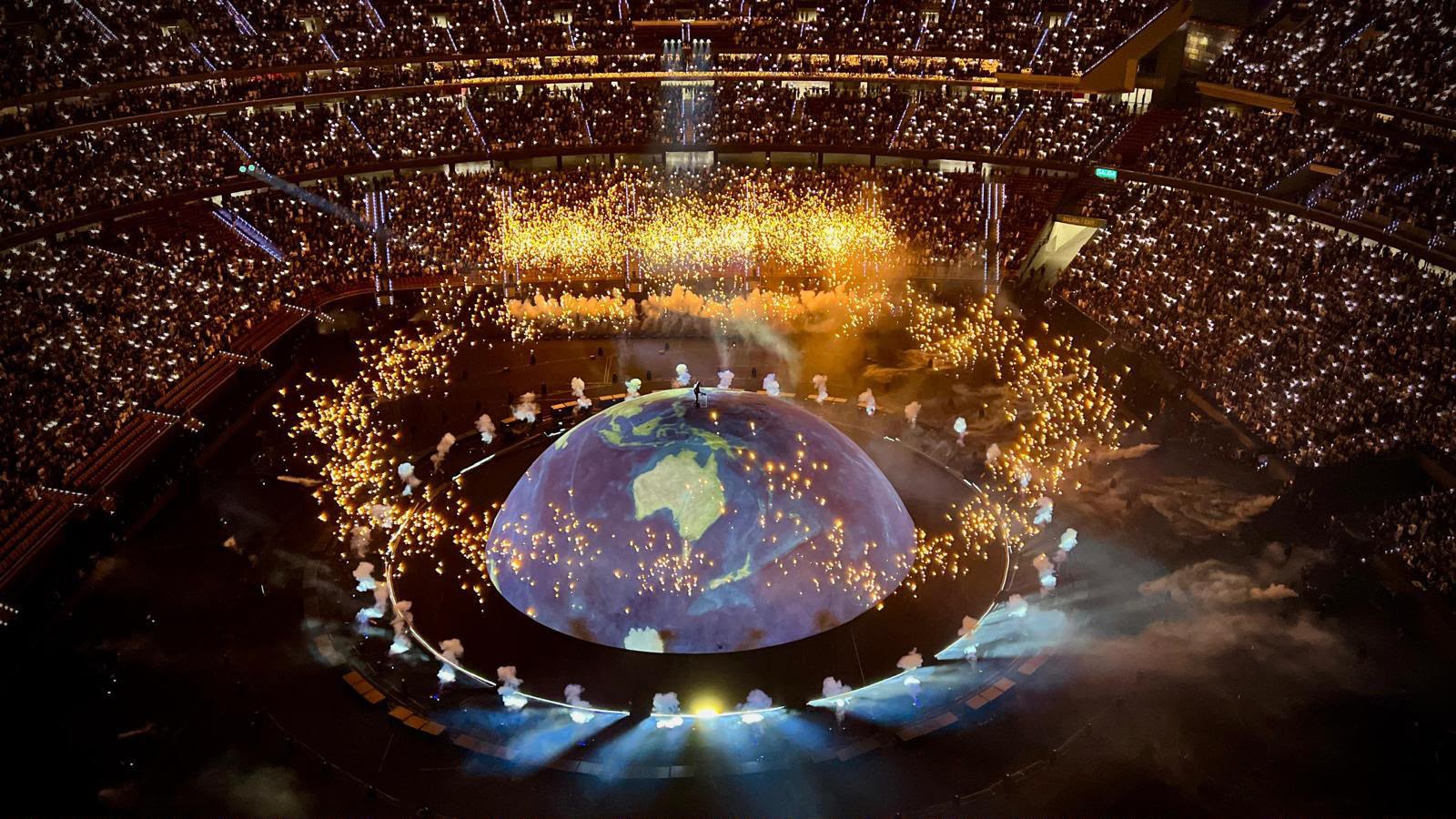
The catalog of Ye is among the best any artist could wield and, as difficult and unjust as it may seem, it can summon the deepest oblivion: the chaos and euphoria of “On Sight” and “Blood On The Leaves,” the double helping of “All Of The Lights,” the parade of classics with “Jesus Walks” or “Flashing Lights,” the transcendent “Ghost Town”… We were fortunate that Kanye prioritized the best records of his career, from “My Beautiful Dark Twisted Fantasy” to “Yeezus,” leaving “Vultures” and “BULLY” as mere anecdotes. The show was utterly irregular, but the music never waned.
As amnesia invaded our minds, the memory of why Kanye means so much to many of us who were there made itself known when he rapped the essential “Through The Wire” from start to finish or when he dusted off his MPC for “Runaway.” Practically none of us had seen Ye live, and moments like these represented the reason we had attended. This was one of the phrases most repeated on the way out of the arena: “It was now or never.”
My companions and I agreed on everything we disliked about the concert, from the terrible sound—especially on songs built with samples—to the anticlimactic and squandered stage. One of my friends asked if anyone felt disappointed. We all said no. Once again, Kanye gets away with it.
