
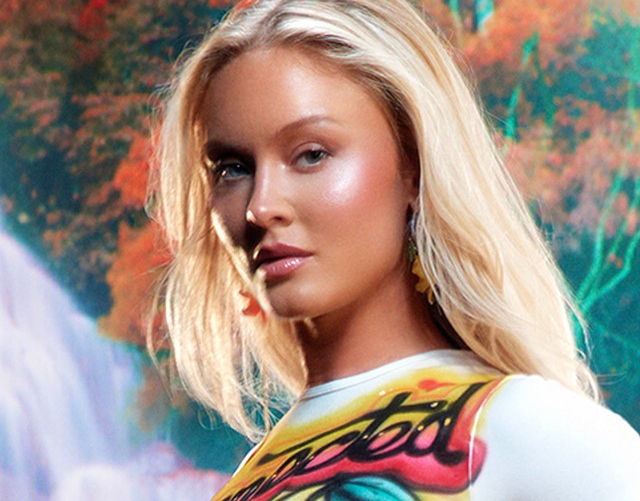
Zara Larsson is troubled by the cost of her shows, aware that the price is steep. She is among the few artists who wants to engage more with this aspect of the industry now that she has become one of the biggest names in pop. Why aren’t there more artists like Zara Larsson?
In a video recently posted on TikTok, the Swedish artist spoke about the tickets for her upcoming Bangkok concert, the sole date on the Midnight Sun tour that isn’t sold out: “I agree with you. I think the tickets are very expensive, and while they align with the market for international concerts in Bangkok, that doesn’t make them any cheaper,” Larsson commented. These tickets range from $85 to $120, not counting the VIP package, which would bring it close to $300.
“Personally, I don’t think a concert has to be something ultra-exclusive or something you need to save for months. And even though I’m not the one setting my prices, I think I’ve learned a lot while touring over the past year and I feel I can take control,” the artist concluded. With such a sensible and grounded message, it’s remarkable that it stands out for its rarity. What stops an artist from taking a hand in setting ticket prices?
@zaralarsson Let’s have a chat
♬ original sound – Zara Larsson
Obviously, no one goes to Ticketmaster and manually fixes concert prices. The pricing is negotiated within the machinery of the industry, where promoters, venues, agents, ticketing companies and all kinds of logistical needs (tickets, travel, etc.) can come into play. This is clear. Yet it would not be accurate to say that no musician has any say in the matter.
Here lies the example of Robert Smith and The Cure. The British band demonstrated its commitment to fans by deciding the prices for their 2023 tour, rejecting dynamic pricing and Ticketmaster Platinum tickets, and releasing tickets at $20. In fact, when Ticketmaster fees exceeded the prices of the tickets themselves, Smith complained and secured the appropriate refunds: “Dynamic pricing is a scam and all artists have the option not to participate. If nobody did it, it wouldn’t exist,” he asserted.
There are four main reasons why there aren’t more artists willing to meddle with ticket prices. The first is prestige, or a certain privileged position. Not all artists are Robert Smith. Obviously, Zara Larsson, who just clicked with audiences in the United States last year, won’t have the same negotiation leverage with Ticketmaster as a band as established as The Cure.
The second reason is money. It’s obvious, but not all believe that concert tickets are expensive. Many artists care about keeping the price of their shows high to earn more money or because production costs are high. That’s the reality, and tickets being priced at market value doesn’t make them villains. This brings us to the third point.
One direct cause of high concert prices is the enormous cost of touring for the majority of artists, a figure that has continued to rise since the coronavirus crisis. The same artists confront dynamic pricing as they must cover costs for flights or trains, and also for hotels, for all members of the tour: technicians, roadies, dancers, musicians, tour managers, etc. Zara Larsson herself recently said that, while she doesn’t want her tickets to be too expensive, she isn’t making “big money” on her tour: “At this point, it’s essentially not-for-profit,” she admitted.
The last reason is the hardest to grasp. Some artists simply don’t want to get involved in such a minefield. They aren’t interested in moral debates, voluntarily deciding that price accessibility is more important than maximizing the tour’s revenue, nor do they fully understand how the promoter, the ticketing company, and the rest of the ecosystem function. For that, they have a whole team behind them.
It’s worth noting that the blame for this issue, in these cases, is diffuse. An artist can have the most astronomical prices in the industry, and the focus will never fall solely on them. It’s very easy for no one to seem responsible, given all the players involved in setting prices. It’s interesting that at least Zara Larsson raises the topic for discussion with her statements, telling the public that artists, to a greater or lesser extent, do have agency in these matters. Artists don’t control everything, but they also aren’t powerless.
Of course, we are still talking about major stars. Small and mid-sized acts are far too busy trying to make money from all of this. However, more and more voices agree that the bigger the artist, the stronger their bargaining power, and less persuasive it becomes to describe tour prices as something that sprang from nowhere or that was already there when they arrived.
